
How to manage draft restrictions without compromising your budget or delivery times
Every year, the arrival of a specific notification on the desks of Paraguayan trade departments triggers immediate seasonal budget alarms. Three letters instantly disrupt cost matrices: LWS, the acronym for Low Water Surcharge. When ocean liners implement this fee, they are simply enforcing a contingency clause built around an inescapable geographical reality. The Paraguay River dictates the country’s commercial rules of engagement, and when draft levels begin to lose feet of depth, traditional logistics frameworks operating on inertia begin to show their cracks.
The most expensive mistake an operations management team can make is treating this seasonal phenomenon as a last-minute climate surprise. The low water levels of the Paraguay waterway follow a cyclical process whose trends and technical indicators are entirely predictable through the routine bulletins of the Dirección de Meteorología e Hidrología and the historical patterns of the upper basins. The true corporate challenge is not the lack of water in the navigation channels, but the lack of foresight in executive offices. Reacting only when barges are already operating at half their nominal capacity almost invariably means accepting a direct loss of competitiveness in international markets.
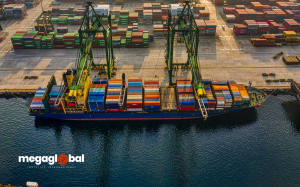
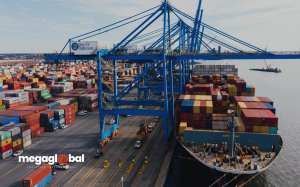
To grasp the economic root of the problem, one must analyze the physics underlying river freight. When the river’s draft is critically reduced, a feeder vessel designed to carry, for instance, eight hundred containers, is forced to set sail with only four hundred to avoid the risk of grounding at shallow passes. From the ocean liner’s perspective, the voyage’s operational costs—fuel, crew, insurance, and port fees—remain exactly the same, but they must now be distributed across half the cargo units. It is precisely that deadweight, that unutilizable capacity restricted by nature, which finances the Low Water Surcharge.
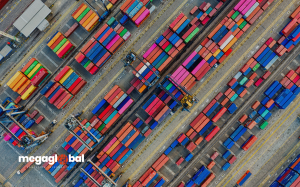
However, the financial blow of this surcharge is merely the surface of a far deeper complication: the indefinite stretching of transit times. Navigating under draft restrictions demands extreme caution, reduced speeds, and frequent forced stops to wait for barge convoys that temporarily block critical passages. This river lethargy causes containers to systematically miss their connection windows with ocean vessels at Río de la Plata terminals. Merchandise becomes stranded at regional transshipment yards, tying up the cash flow of companies importing electronics or industrial supplies, and emptying local retail shelves right at peak seasonal demand.
Mitigating this landscape of uncertainty requires replacing the passive stance of “waiting for rain” with true multimodal route engineering. When the traditional river artery enters its most critical phase, supply chain resilience hinges on diversifying the country’s entry and exit gateways.
An advanced logistics strategy entails structuring efficient alternatives months in advance to prepare for low water levels. During periods of critical draft, strategic transshipment through the Port of Montevideo and the advance negotiation of extended free time stand out as the most solid contingency option. By securing connection priority and coordinating direct international transport into Paraguay’s primary customs zones, companies successfully bypass the river freight bottleneck and safeguard their profit margins.
This combined framework requires meticulous timing control at bonded warehouses and a network of certified ground carriers at origin. Ultimately, business continuity is not defined by the continent’s weather conditions, but by the technical capacity of your logistics partner to redraw maps before your cargo runs aground.
#ParaguayRiver #LowWaterSurcharge #MultimodalLogistics #SupplyChainResilience #ForeignTradeParaguay #InlandTransit #Megaglobal #FreightForwarding #RiskMitigation #LogisticsStrategy